Your Trusted Certified Inspector for Your Next Home Inspection
FHA 203(k) Loans in 2026: What the New $75K Limit Means for West Central Ohio Fixer-Uppers
The 2026 lending landscape marks a renewed momentum for rehabilitation financing, and if you're eyeing fixer-uppers in West Central Ohio, you need to understand exactly how the FHA 203(k) program's $75,000 threshold works: and when it doesn't apply. This isn't just a policy update; it's a catalyst for transforming overlooked properties into high-value assets while creating equity in communities that need it most.
As an FHA Certified 203(k) Rehab Consultant, I've guided dozens of buyers and investors through the nuances of rehab loans, and one thing is clear: clarity around loan limits empowers smarter decisions. Let's break down what the $75K cap actually means, when you should exceed it, and how West Central Ohio's specific county limits shape your strategy.
Decoding the $75,000 Limited 203(k) Cap
The $75,000 limit applies exclusively to the Limited 203(k) loan: formerly known as the Streamline 203(k): and represents the maximum rehabilitation amount you can borrow under this program tier. This version is designed for non-structural, cosmetic, and minor mechanical repairs that don't require extensive architectural or engineering oversight.
Think of Limited 203(k) projects as upgrades that enhance livability without altering the home's structural integrity:
Interior refreshes: New flooring, paint, updated fixtures
Kitchen and bath modernization: Cabinet refacing, countertop replacement, appliance installation
Minor mechanical work: HVAC tune-ups, water heater replacement, electrical panel upgrades (non-structural)
Energy efficiency improvements: New windows, insulation, weatherproofing
Accessibility modifications: Ramps, grab bars, wider doorways
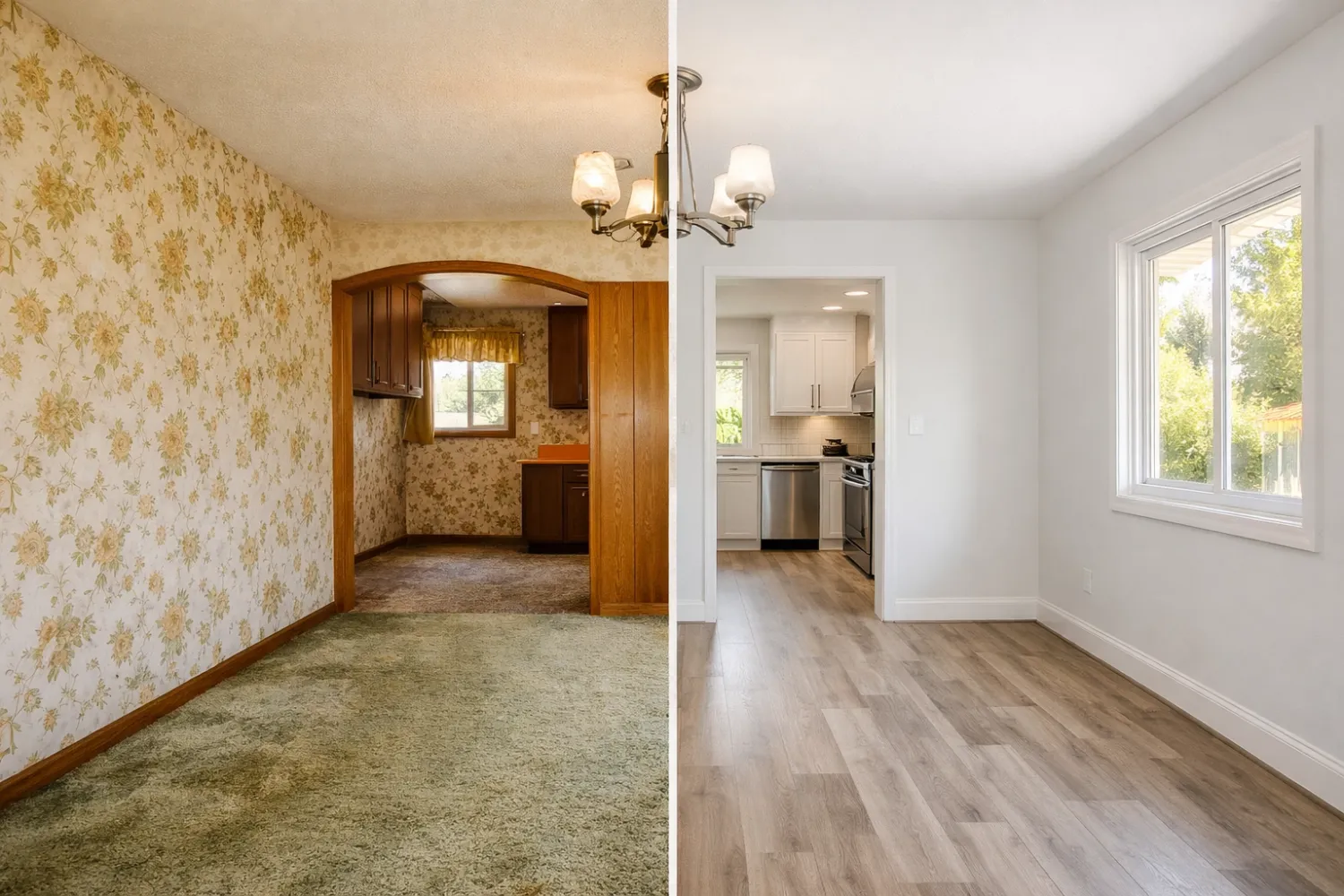
The appeal? Faster processing times, lower fees, and no requirement for a HUD consultant on projects under $35,000. For investors flipping properties or first-time buyers stretching budgets, this streamlined path accelerates deal closings and reduces transactional friction.
However: and this is critical: the $75,000 cap is separate from your purchase price. Your combined loan amount (purchase price plus rehab costs) must still fall within your county's FHA loan limit. Miss this detail, and you'll face financing roadblocks mid-transaction.
When to Deploy the Standard 203(k) Instead
If your West Central Ohio fixer-upper requires structural rehabilitation, major system overhauls, or substantial additions, you're automatically in Standard 203(k) territory: where the $75,000 cap doesn't exist.
Standard 203(k) loans accommodate:
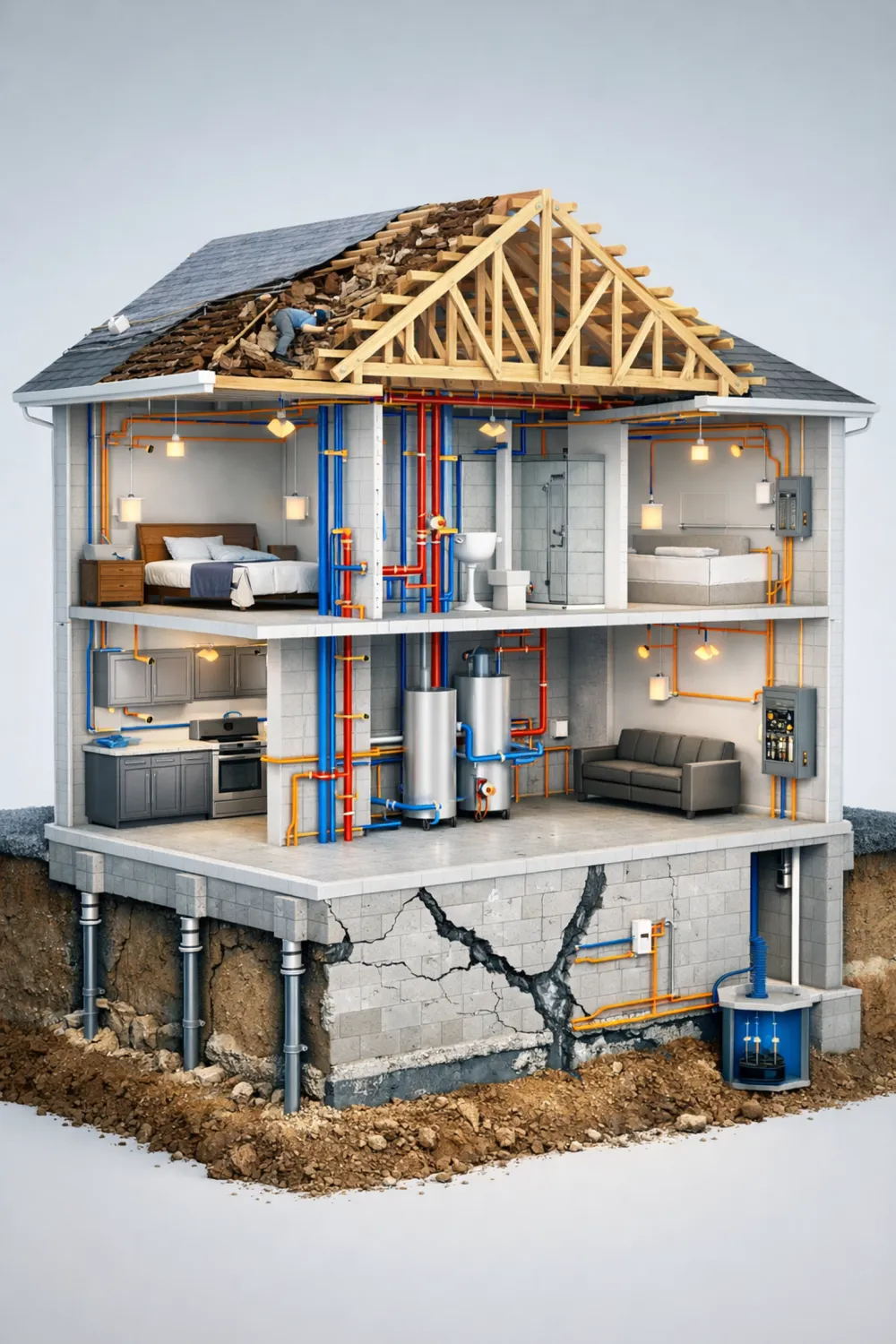
Foundation repairs and structural reinforcement
Roof replacement and major framing work
Complete plumbing or electrical system rewiring
Room additions, garage conversions, deck construction
Mold remediation and environmental hazard removal
Demolition and rebuilding of damaged sections
With a Standard 203(k), you can borrow up to 110% of the home's estimated after-repair value (ARV), provided the total loan doesn't exceed your county's FHA limit. This financing model is transformative for properties with serious deferred maintenance: homes that traditional lenders won't touch become accessible through layered rehab capital.
The trade-off? More rigorous oversight. Standard 203(k) loans require:
A HUD-approved consultant (like Rose's Home Services LLC) to prepare a feasibility study and scope of work
Contractor bids and work write-ups reviewed for compliance
Draw inspections at project milestones before releasing funds
Architectural or engineering reports for structural changes
This additional layer isn't bureaucracy: it's protection. I've seen firsthand how thorough consultant oversight prevents cost overruns, contractor disputes, and code violations that derail projects. The consultant becomes your strategic partner, ensuring rehab budgets align with market realities and lender requirements.
West Central Ohio's 2026 County Limits: Your Strategic Boundaries
FHA loan limits are county-specific, and in 2026, single-family home limits range from $541,287 in the most affordable counties to $1,249,125 in high-cost areas. For West Central Ohio counties: including Auglaize, Mercer, Shelby, Darke, and surrounding areas: your local limit typically falls on the lower end of that spectrum, reflecting our region's affordability advantage.
Let's apply this to a real scenario:
Example: Limited 203(k) in Auglaize County
County FHA limit: $548,000 (hypothetical 2026 figure)
Purchase price: $180,000 (dated ranch with cosmetic issues)
Rehab budget: $68,000 (flooring, kitchen cabinets, HVAC, paint)
Total loan amount: $248,000 (well within county cap)
This buyer leverages the Limited 203(k) to modernize a solid-bones property without stretching beyond local market values. The $68,000 rehab transforms the home into a competitive listing worth approximately $280,000 post-renovation: instant equity creation.
Example: Standard 203(k) in Mercer County
County FHA limit: $548,000
Purchase price: $145,000 (1970s farmhouse with foundation cracks and outdated systems)
Rehab budget: $125,000 (foundation repair, new roof, complete electrical rewire, bathroom additions)
Total loan amount: $270,000 (still compliant)
Here, the Standard 203(k) enables an investor to tackle serious structural deficiencies that would otherwise require cash reserves or hard money loans. Post-renovation ARV: $320,000. The 110% LTV rule allows borrowing against future value, not just current condition: a game-changer for distressed property acquisition.
You can verify your exact county loan limit using HUD's Loan Limit Finder tool on the U.S. Department of Housing and Urban Development's website.
Why West Central Ohio is Prime for 203(k) Opportunities
Our region sits at the intersection of affordability, housing stock age, and revitalization demand: three factors that make rehab loans particularly powerful.
Affordability advantage: With median home prices significantly below state and national averages, West Central Ohio buyers and investors can acquire properties with built-in equity margins. A $150,000 purchase with $70,000 in smart rehab can yield a $260,000 asset: returns that urban markets can't match at this price point.
Aging housing inventory: Much of our local stock was built in the 1950s–1980s, meaning homes with strong structural integrity but outdated systems and finishes. These properties are ideal 203(k) candidates: they need modernization, not demolition.
Community resurgence: Small towns across West Central Ohio are experiencing renewed momentum as remote work flexibility draws families seeking affordability and quality of life. Renovated homes become anchors for neighborhood revitalization, driving adjacent property values upward.
How Rose's Home Services LLC Accelerates Your 203(k) Success
Navigating rehab loans without expert guidance is like running a marathon without training: you might finish, but the experience will be unnecessarily painful. As FHA Certified 203(k) Rehab Consultants, we deploy a systematic approach that transforms complex regulations into actionable project roadmaps.
Our process:
Pre-purchase feasibility assessment: Before you commit to a property, we evaluate whether the rehab scope aligns with 203(k) requirements and local market values. This prevents costly mistakes at the offer stage.
Comprehensive work write-up: We prepare the detailed scope of work and cost estimates that lenders require, ensuring contractor bids are complete and code-compliant.
Contractor coordination: We review bids, vet contractors for licensing and insurance, and facilitate agreements that protect your interests throughout construction.
Draw inspection and fund release: At each project milestone, we inspect completed work and authorize fund disbursement: ensuring contractors deliver quality before receiving payment.
Final inspection and compliance sign-off: We verify all work meets code standards and lender requirements before project closeout.
This level of oversight isn't optional on Standard 203(k) loans: it's mandatory. But even on Limited 203(k) projects where consultants aren't required, having an experienced advisor prevents the common pitfalls that delay closings: incomplete contractor bids, missing permits, scope creep beyond the $75K threshold.
We've helped clients across West Central Ohio transform everything from neglected farmhouses to mid-century ranches into modern, energy-efficient homes. The common thread? Strategic planning before the first hammer swings.
Strategic Moves for 2026: Your Action Framework
Whether you're a first-time homebuyer, seasoned investor, or real estate professional advising clients, now is the time to ramp up your understanding of rehab financing. The 2026 lending environment reinforces opportunities for those who act decisively.
For homebuyers: Don't limit your search to move-in ready properties. Expand your criteria to include homes needing $50K–$75K in updates. With a Limited 203(k), you'll compete against fewer buyers, negotiate stronger prices, and customize finishes to your preferences: all while building immediate equity.
For investors: Target distressed properties in West Central Ohio's revitalizing communities. Use Standard 203(k) financing to acquire and rehab at scale, leveraging the 110% LTV advantage. Build strong networks with local contractors who understand FHA compliance requirements: speed and quality execution separate profitable flips from costly holds.
For real estate agents: Educate your clients about rehab loan options before they dismiss fixer-uppers. Partner with certified 203(k) consultants early in the transaction to provide accurate feasibility assessments. Your ability to unlock off-market inventory through creative financing becomes a competitive differentiator.
For contractors: Position your business as 203(k)-compliant by understanding FHA work write-up standards, maintaining proper licensing, and delivering projects on schedule. Rehab loan work provides consistent deal flow, especially as more buyers discover these financing tools.
The Bigger Picture: Equity Creation and Community Transformation
Beyond individual transactions, the 203(k) program catalyzes neighborhood revitalization at scale. Every renovated property becomes a visual benchmark that elevates surrounding home values. Every code-compliant upgrade improves housing stock safety and efficiency. Every successfully financed rehab project demonstrates what's possible when buyers have access to purpose-built financing tools.
West Central Ohio's affordability, combined with FHA's flexible rehab capital, creates a rare convergence: accessible homeownership and value creation within the same transaction. You're not just buying a house: you're participating in economic momentum that benefits entire communities.
As a trusted advisor in this space, I see the transformation daily. Families who thought homeownership was out of reach suddenly have pathways. Investors who avoided older properties now see lucrative opportunities. Neighborhoods written off as declining experience renewed vibrancy.
This is the 2026 opportunity: strategic deployment of rehab financing to build wealth while modernizing housing stock. The $75,000 Limited 203(k) cap isn't a restriction: it's a clear parameter that helps you choose the right financing tool for each project.
Ready to Turn a Fixer-Upper Into Your Next Success Story?
Whether you're evaluating your first rehab project or expanding your investment portfolio, having an experienced 203(k) consultant in your corner transforms uncertainty into confidence. At Rose's Home Services LLC, we bring decades of home inspection expertise and FHA certification to every engagement: ensuring your rehab loan closes smoothly and your project delivers on its value promise.
Don't navigate the 203(k) process alone. Schedule a consultation to discuss your specific property and renovation goals. Let's explore how the right financing strategy can unlock your West Central Ohio fixer-upper opportunity in 2026.
The homes are waiting. The capital is available. Your next move creates the momentum.
Rose's Home Services, LLC
Menu
Home
